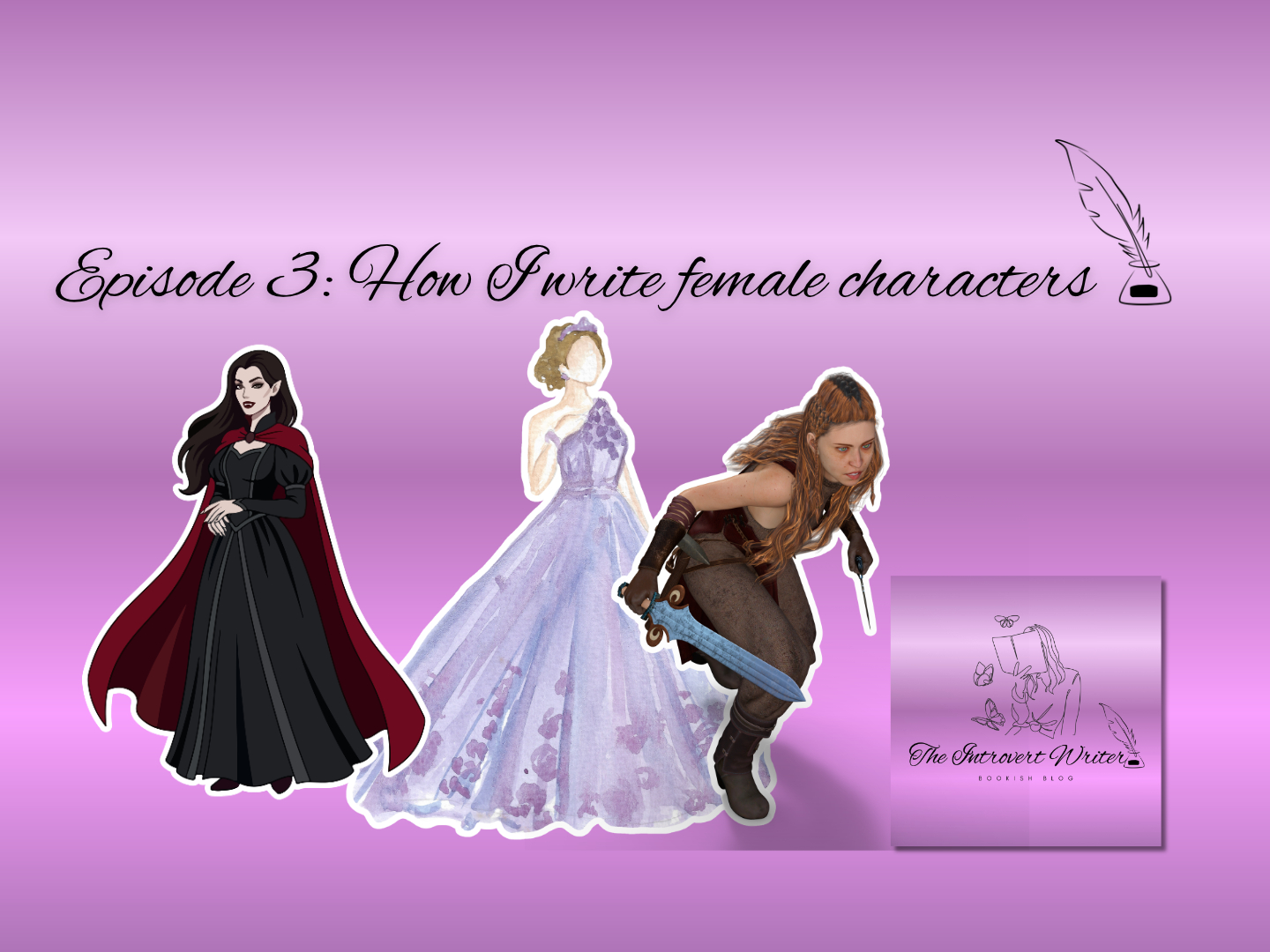
The subtle art of breaking away from stereotypes
There seems to be consensus, at least amongst female readers, that the “damsel in distress” arc of classic fantasy no longer works. The virginal young women being rescued by the dashing and yet brooding male character now causes more than an eyeroll. The many unnamed “wife of” make me frown disapprovingly and stories where the male:female ratio is 10:1 will inevitably lead me to close the book, unless the setting is specifically single gendered.
I mean, no one has a mother? A sister? A neighbour from across the street? Did all men sprout from the ground? No plot feels realistic to me if absolutely no female character has any weight in it.
As a female reader, I long to see female characters with more agency, with their own flaws and qualities that are beyond being beautiful, kind, or motherly. There’s nothing wrong with being either or all of those things, but I also need them to feel authentic.
Speaking plainly, seeing female characters who are essentially men wearing a dress is as bad as the damsel in distress archetype.
Human personality is a spectrum and while women who display personality traits that are considered masculine in modern society exist, I believe that as writers we can do more for our female characters than just putting a sword in their hands and sending them to lop heads off.
Don’t get me wrong here: writing about female warriors is not a bad thing. Despite what has been historically fed to us about the “traditional roles” of men and women in different societies throughout history, the record is finally starting to be set straight. A famous Viking burial in Björkö, Sweden was believed to be that of a man for almost two hundred years simply because it contained a rich load of weapons, until biological evidence proved it to be of a woman.
And this was not an isolated case. As we set the archaeological record straight, it becomes clearer that female warriors were commonplace and not an exception. Many more burials of female Viking warriors were found. Evidence is mounting to support the theory that the Amazons were real and not a myth and the biased interpretation of ancient texts, purposefully changing the role of women in history is being uncovered.
That in itself is its own can of worms and I am digressing – that topic deserves its own post.
The point I want to make is that great female fantasy characters don’t need to fall in one of two categories – either the rescuer or the rescuee.
Neither does she need to be an evil seductress either. By now I think we safely say that this arc is also very outdated…
Well then, how do I develop my female characters?
First I need to clarify that I am an absolute pantser. I don’t outline my books and I do little to no preparatory work when creating my characters. They are born from my head like Athena – already grown and fully armed! Adjustments happen as I edit, but I seldom completely change a character’s persona to fit the plot, instead, the plot moves accordingly to how each character reacts to the events.
Case studies:
Elizabeth “Lizzie” Endell (The Dreams Thief, Otherworld book 1) – Lizzie is a recently graduated doctor who has a difficult relationship with her parents. She is awkward and shy, wears glasses and grubby jeans, and is the classic epitome of the nerdy type. In her arc, Lizzie will discover that she is a descendant of Fae and carries powerful magic. Although I described how she learns how to wield this newly found magical power, I didn’t want her to suddenly be completely badass in magic. To overcome the dangers and hurdles coming her way, Lizzie uses her natural talent for riddles and puzzle solving to defeat the antagonist.
Vivian Lloyd (Blood and Dreams, Otherworld book 2) – Vivian is Lizzie’s best friend, also a medicine graduate but with a very different profile from Lizzie. She is a woman with goals and plans very well defined who does not swallow bullshit easily. She finds herself a hostage in a magical world she did not know existed, surrounded by hostile Fae who can cast many different powerful spells. She is brave, but not stupid. Vivian is a critical thinker who will tackle her share of the plot using her scientist skills and ability to strategize.
Lywyn Varan (A Land of Stolen Dreams, Otherworld book 3) – Lywyn is a warrior par excellence. Her appearance and unusual abilities made her an outcast in her own family and her introversion level 1,000 made her a loner. Although she is recognised as one of the strongest warriors among the Fae, her ability to fight is not what she needs to navigate the challenges laid before her. She will need to step out of her comfort zone and to unbury her emotions to understand the changes in the world around her and what is her role in the plot. Of these three female characters, she was the hardest for me to write, because I did not want her to stop being an introvert: that is who she was and I wanted Lywyn to defeat her enemies without having to completely transform her personality.
Taerlys (Eileerean Saga) – Taerlys is one step away from being a complete narcissist. She is wily and undeterred in her goals by any moral consideration. She has the classic hallmarks of a good villain, but a villain she is not and although she is directly responsible for everything bad that happens in the wake of her actions, she is never outright evil and as she comes to realise the consequences of what she wrought, she accepts responsibility for her mistakes (something a true narcissist would never do).
Daelyn (Eileerean Saga) – Daelyn’s personality is borderline annoying. She is the golden child (Taerlys’ oldest daughter) and spends her whole life under the weight of that expectation. Her attachment to her family clashes with her sense of right and wrong, and both challenge her unshakeable sense of duty. Bottling in all her emotions is ultimately her undoing, because every time her feelings boil to the surface, she commits a mistake. It is only when she stops believing that other people uphold the same morals as her, when she acts strategically that she can take control of the events around her. It will be too late though.
Haewyn (Eileerean Saga) – When I first created Haewyn (Taerlys’ youngest daughter) she was the classic villain: amoral, ruthless, just distilled evil. And then I was bored with her. I didn’t want her to be the Evil Queen hiding in her Evil Lair. I wanted to know why she acted the way she did, what was her internal thought process, how did she justify her behaviour and that is why I began to go back in time so that I could write more of her origin story. Make no mistake: she is the villain, a classic narcissist, completely self-centred and unable to accept her share of responsibility when things don’t go her way, but I wanted everyone to know why.
Elara (Eileerean Saga) – As Haewyn is the classic antagonist, Elara is the classic protagonist, the quintessential Chosen One, and like Haewyn, she was boring me, so I tried to add a sense of realism to her arc.
She is young and carries the defiance and doubts of her young age, while at the same time she is burdened with the heavy responsibilities of her position as future Queen. She is an accomplished warrior and proficient magic wielder, because these skills were expected of her as the Queen’s heir, but none of this is what is needed to complete her arc. Before the story ends, she will be faced with many moral questions and decisions.
Because the Eileerean Saga is not yet completed, both Haewyn and Elara’s arcs are also still evolving so I don’t want to say much more about them at this stage.
Conclusion:
When female readers demand more strong female characters in fantasy, adding a female version of a male character as some form of tokenism is not what we’re asking for. Female characters in fantasy can and should be complex too. They should help drive the plot without necessarily being women who behave like men. Even in action-packed fantasy storylines, strategy, knowledge and cunning can be the weapons of choice for a female – or a male! – character. That is not to say that female characters can never wield a weapon, only that her arc needs to make sense in the broader context of the story. We don’t need a bookworm transformed into the greatest swordswoman or mage in the kingdom for her to save the day!
That is what I try to achieve in my stories: female characters that leave their mark because of who they are.
Disclaimer: This post reflects my personal experience as a reader and a writer. It should not be taken as an expert recommendation or established best practices. All opinions are my own.
Did you enjoy this piece? Like, share and leave a comment! It would mean a lot if you could further support my writing by buying me a cup of tea.




I would love to hear your thoughts!